Family & Tech Blog
Practical tips on family organization, communication, and digital privacy. ADHD, app comparisons for families, Calm AI — from experience, not theory.
No articles in this topic yet.

Top Stories

The 10 PM Grade Alert: Why School App Notifications Spike Your Stress
A grade notification at 10 PM can wreck the whole family's evening. It's not a coincidence — it's digital microstress. What happens in your body, and how to get your calm back without cutting off from school.

The ADHD Tax: What Forgetting Actually Costs (and Why It Isn't Laziness)
A late fee, a subscription you meant to cancel, spoiled groceries. It's the 'ADHD tax' — the real cost of executive dysfunction, not irresponsibility. Where it comes from and how to lower it.

Parental Sensory Overload: When Everything Is Just Too Much by Evening
Shouting, touch, the phone, and 'what's for dinner' all at once — and you want to walk out of your own home. That's sensory overload: a neurological response, not a weakness. Where it comes from and what actually helps.

RSD in ADHD Parents: Why Forgetting Something Small Feels Like a Catastrophe
You forget the gym kit and spend the rest of the day feeling like the worst parent alive? It might be RSD — rejection sensitive dysphoria. Not oversensitivity. Neurology. What helps.

Parental Burnout Is Worst in the Wealthy West — and It Isn't About Money
The countries with the highest parental burnout aren't the poorest — they're the wealthy, individualistic ones. What the 42-country data shows about isolation, mental load, and what actually helps.

ParentOS vs Google Calendar: Why a Calendar Alone Isn't Enough for Families
Google Calendar works beautifully for individuals. But families need shared awareness, not just shared events. Here's where a calendar stops and a family OS begins.

Big Platforms Are Fighting the EU Over AI Assistants. Your Family's Data Is in the Middle
The largest tech players are negotiating with the EU over how AI assistants launch, and some features skip Europe. What it means for families — and a different way to handle data.

Summer Schedule for Kids: Anchors, Not Timetables
You don't need a rigid summer schedule for kids — you need 3-4 anchors that give the day shape without killing the freedom. A flexible daily template, screen rules that stick, and a rhythm that travels to grandma's house.

The Weekly Family Meeting: 10 Minutes That Save 10 Hours of Texting
A weekly family meeting is just ten minutes at the kitchen table — syncing the calendar, splitting logistics, and letting a kid bring something up. Here's a template and how to start this Sunday.
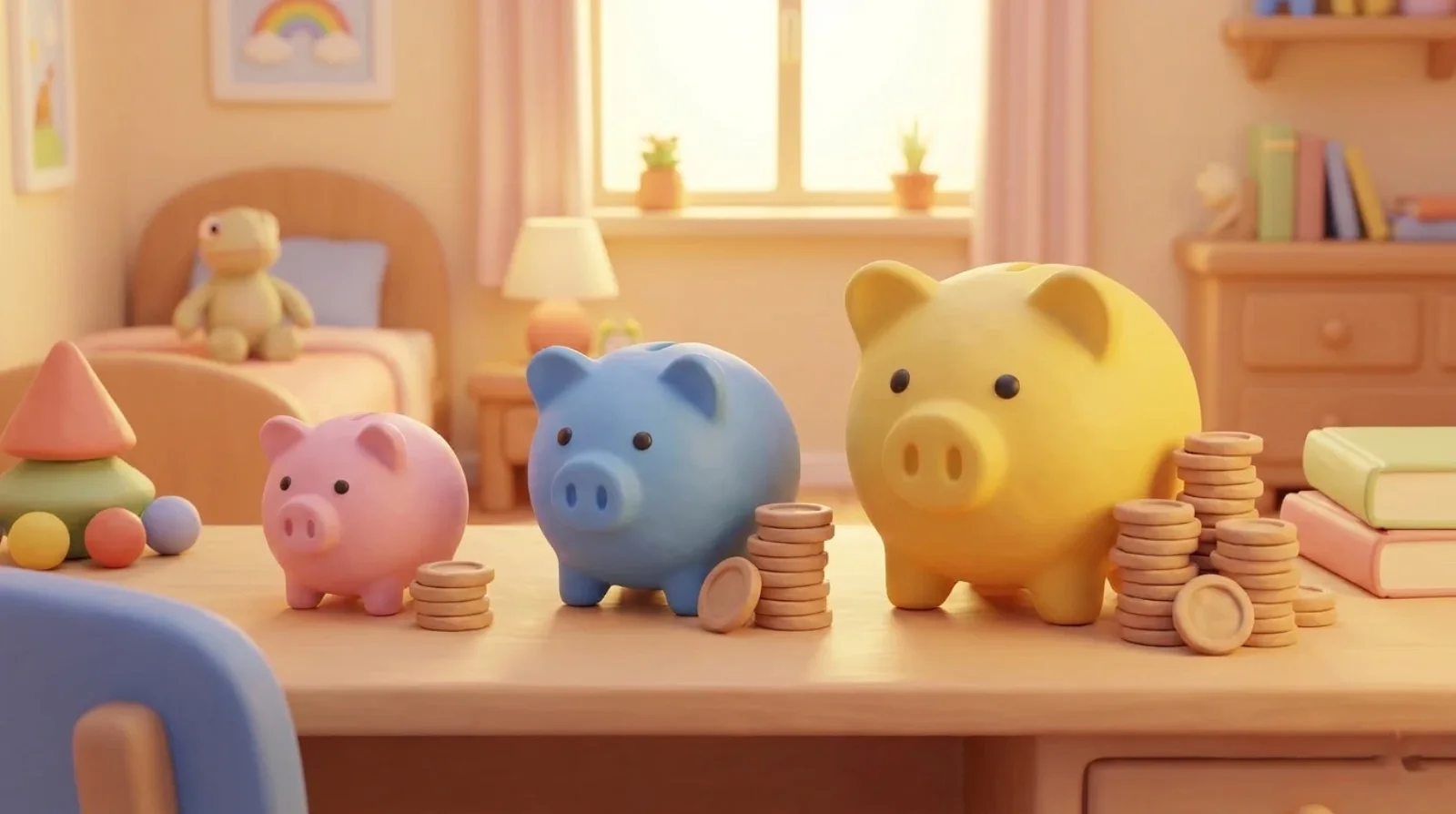
How Much Allowance by Age? 2026 Chart for Parents
How much allowance should you give by age? See average weekly allowance data by age, a simple rule of thumb, when to start, and whether to tie it to chores.

Co-Parenting App: What It Does & What to Look For (2026 Guide)
A co-parenting app keeps two households on one page: shared calendar, custody schedule, secure messaging, expense tracking. What to look for and who needs what.
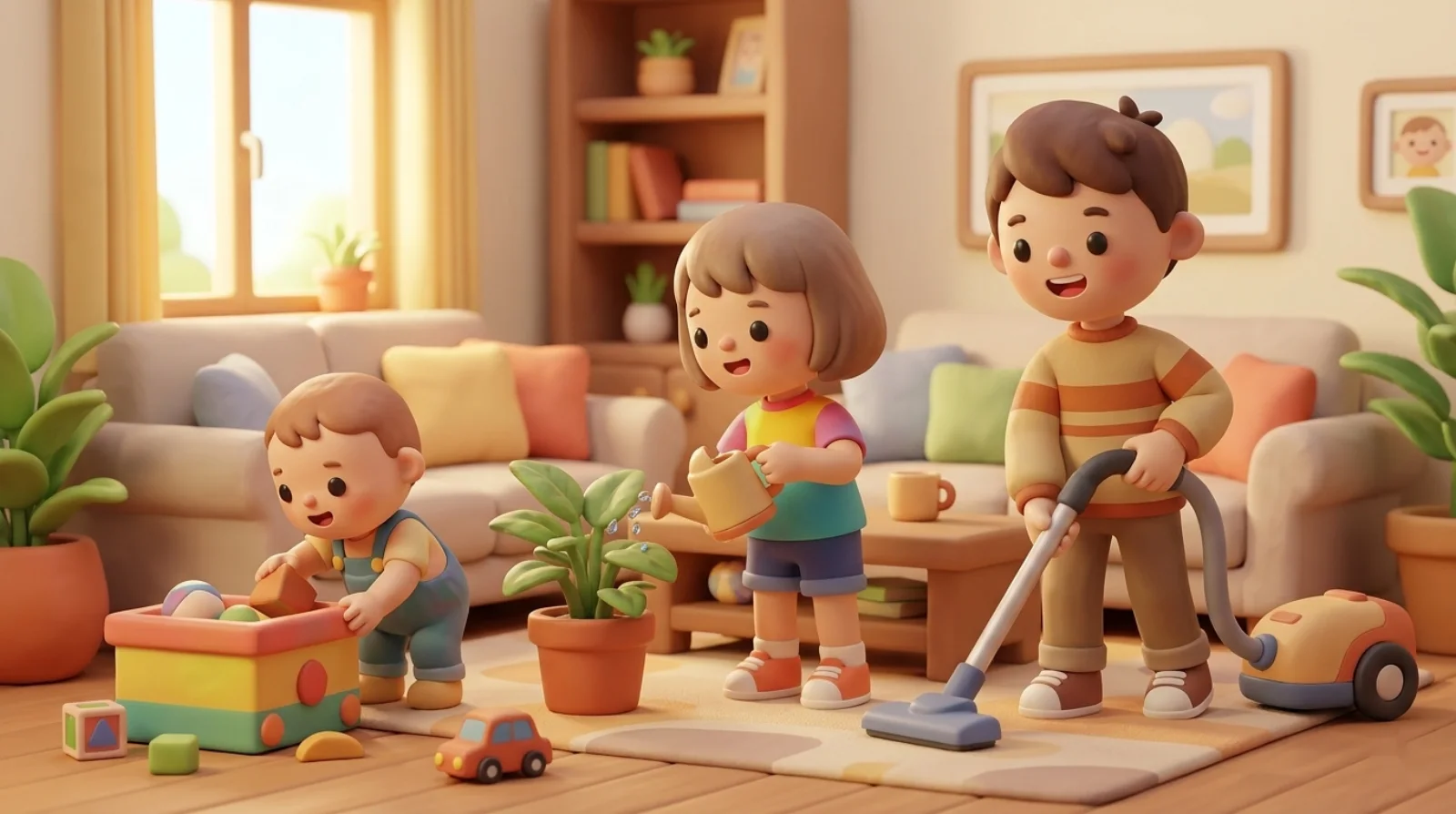
Chore Chart by Age: What Kids Can Do at Every Stage (+ How to Make It Work)
A chore chart by age, from toddlers to teens, plus a pediatrician-backed way to make chores stick. Free, age-appropriate chore ideas and a simple setup guide.

Baby Sleep Schedule by Age: Sample Routines from Newborn to Toddler
Baby sleep schedule by age, with how much sleep babies need (AASM guidelines) and sample daily routines from newborn to toddler, plus a bedtime routine that works.

Free Co-Parenting Calendar App: What You Really Get (2026)
A free co-parenting calendar app sounds perfect -- but free tiers have limits. What they offer, where they fall short, and how to choose one that actually fits.

Are You the Default Parent? Here's What It Actually Costs
What is a default parent and what does it cost? Research-backed guide to the career, health, and relationship impact — plus how domain transfer (not task delegation) fixes it.

Best Organization System for Parents with ADHD in 2026
The best organization system for ADHD parents works with your brain, not against it. Evidence-based guide covering why traditional planners fail, what neuroscience says about executive function and time blindness, and practical systems that actually stick.
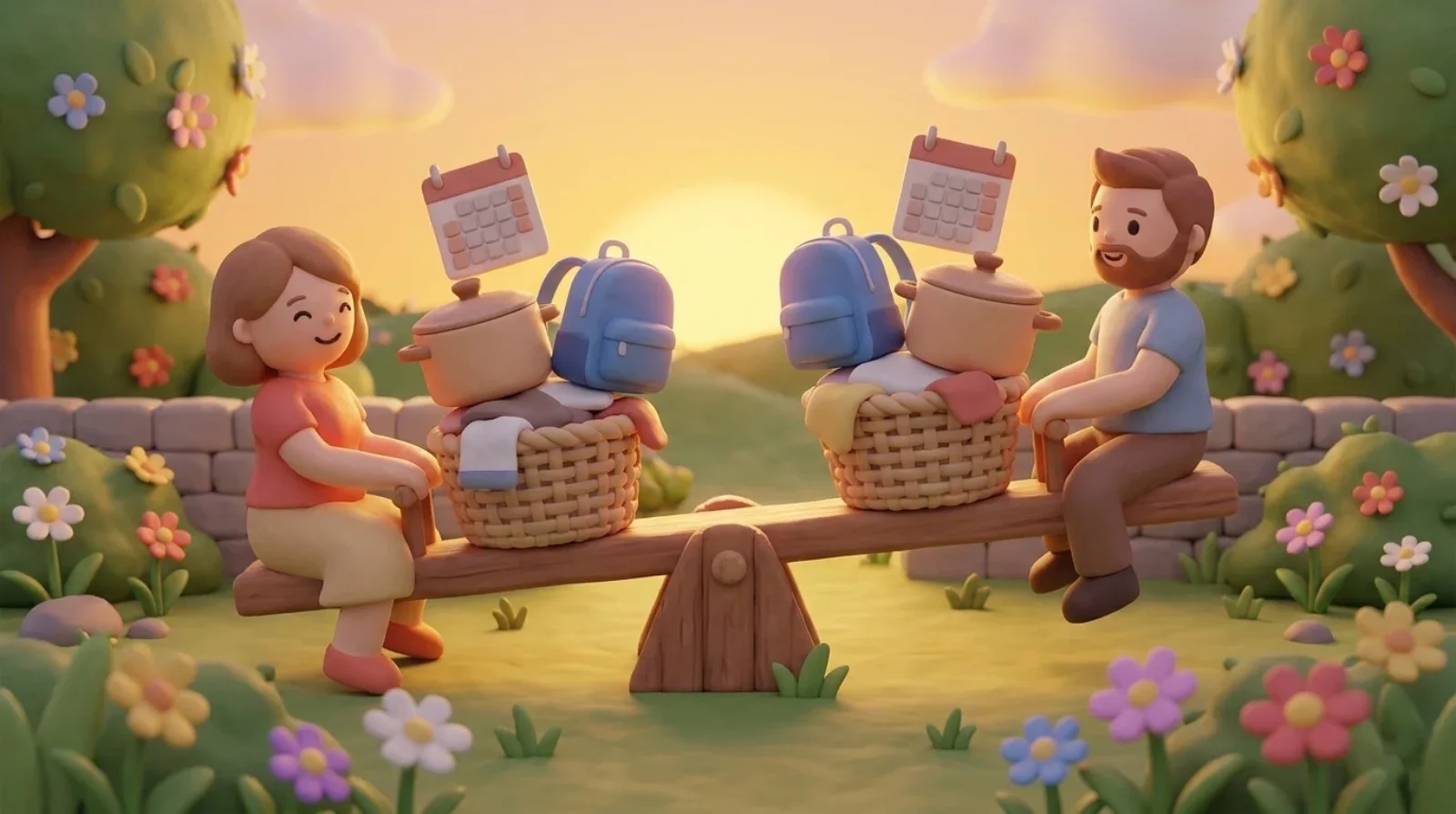
The Fair Play Method + Technology: How to Actually Implement It
Eve Rodsky's Fair Play makes invisible labor visible, but the cards end up in a drawer. Learn how technology closes the implementation gap — turning CPE ownership into a living system.

How to Share the Mental Load With Your Partner
A practical, non-blaming guide to redistributing cognitive labor in your relationship. Three conversations, one weekly ritual, and a system for making invisible work visible — without keeping score.

I Built a Family AI Platform and Nobody Used It — Here's Why
A founder's honest post-mortem on why family AI projects fail. The Reddit thread that exposed the real problem with family tech — and what happens when you build something nobody asked for.

The Mental Load in Families: What It Really Is, What It Costs, and How to See It
Mental load is the invisible cognitive labor of anticipating, tracking, and deciding everything a family needs. Research shows 71% falls on mothers, regardless of income. This is the definitive 2026 guide — with a 5-question audit to make the imbalance visible.

The Nag Loop: Why Reminding Your Partner Is Not Sharing the Load
The nag loop — where one parent repeatedly reminds the other about household tasks — isn't a communication failure. It's a visibility gap. Research-backed strategies and a 7-question diagnostic to break the cycle without a fight.

The Overwhelmed Parent's Guide to Getting Help (Without Asking)
If you are an overwhelmed parent wondering why 'just ask for help' never works, here are 3 structural shifts that make family support automatic, visible, and shame-free.

The Wait Until 8th Movement: A New Baseline for Digital Wellbeing
The Wait Until 8th pledge — delaying smartphones until 8th grade — is gaining momentum globally. But one family can't do it alone. Here's why neighborhood-level coordination is the missing piece, and how it works in practice.

Time Blindness in ADHD Families: Why Visual Timers Work When Clocks Don't
Time blindness — the inability to feel time passing — is a core feature of ADHD, not a character flaw. Visual timers externalize time into something the ADHD brain can see and work with. Here's what the research says and how families are using them without turning them into another source of pressure.

Weaponized Incompetence: When "I Don't Know How" Is a Strategy
Weaponized incompetence is a reinforcement loop, not laziness. Learn to spot the pattern, understand why it happens on both sides, and use domain ownership to break the cycle without blame.

Why a Shared Family Calendar Is Not Enough: The Rise of Proactive AI Organizers
Shared calendars digitize events but leave the cognitive labor — anticipating, planning, monitoring — on one person. Here's what proactive AI family organizers do differently.

How to Stop Yelling at Your Kids: 7 Strategies That Work
How to stop yelling at your kids and stay calm. 7 research-backed strategies, why yelling harms children more than you think, and what to do when you slip up.

Custody Schedule Examples: 2-2-3, Week-On/Week-Off & More
A living map of shared-custody schedules — 2-2-3, week-on/week-off, 2-2-5-5, and alternating weekends — with a 3-question decision tree and what each pattern actually feels like for kids.

Gentle Parenting: A Practical, No-Guilt Guide for Real Families
What gentle parenting actually feels like at 5:45 PM in a parking lot — and how to do it without burning out. Includes a 5-situation cheat sheet and the repair framework nobody talks about.

How to Get Kids to Do Chores Without Nagging (Backed by Research)
You've tried asking, charts, and bribes — and you're still doing it yourself. Research-backed strategies that replace nagging with visible routines kids actually follow.
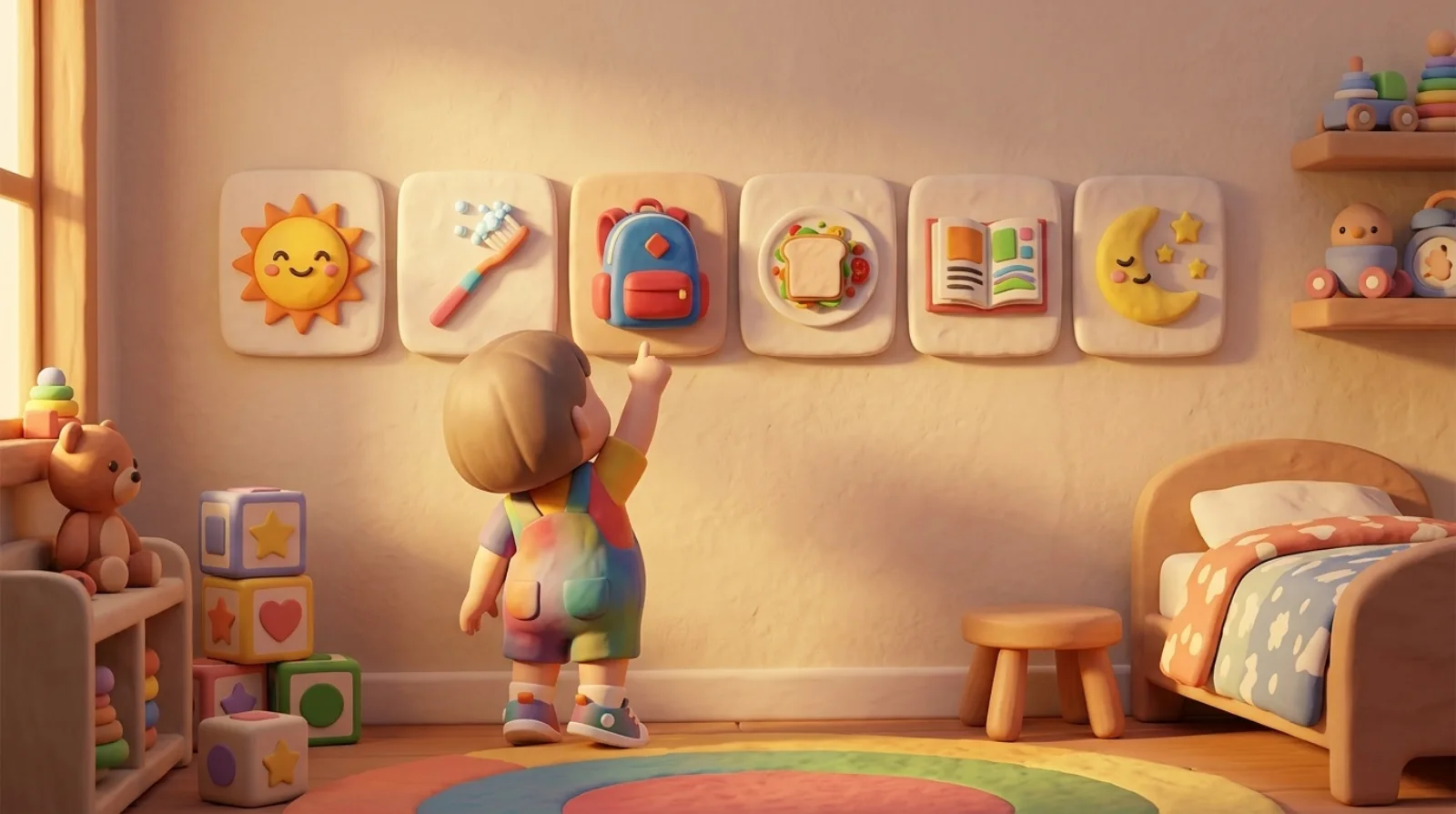
Visual Schedule for Kids: How to Build One That Works (ADHD & Autism)
A visual schedule shows your child the map of the day — not with words that vanish, but with pictures that stay. Evidence-based guide for autism and ADHD families.

How to Meal Plan for a Week: A Simple System (Sample Week Inside)
How to meal plan for a week in five calm steps — because the hard part isn't cooking, it's deciding. A repeatable system, a sample week table with reasoning, and how to make the plan something the whole family can see.
Screen Time Rules for Kids: Age-by-Age Guidelines That Work
Screen time rules for kids by age, based on AAP guidelines, plus how to build a family media plan that's realistic and easy to stick to.

Family Meal Plan Template (Free, Copy-and-Use)
A free family meal plan template you can copy in seconds — plus why the blank grid isn't the hard part. Includes a filled-in example, a 4-step method, and the 'start with 3 days' trick that actually sticks.

How to Organize Family Medical Records (Vaccines, Meds & History)
How to organize your family's medical records so you can answer the triage nurse's questions when your hands are shaking. Step-by-step system, emergency health card template, and privacy guide.
Grocery List App for Family: The Problem Isn't Shopping — It's Coordination
Three lists in three places and nobody knows what's current. A shared grocery list app fixes the coordination gap between two adults — not the shopping itself. Paper vs app decision matrix, what to look for, and one rule that changes everything.
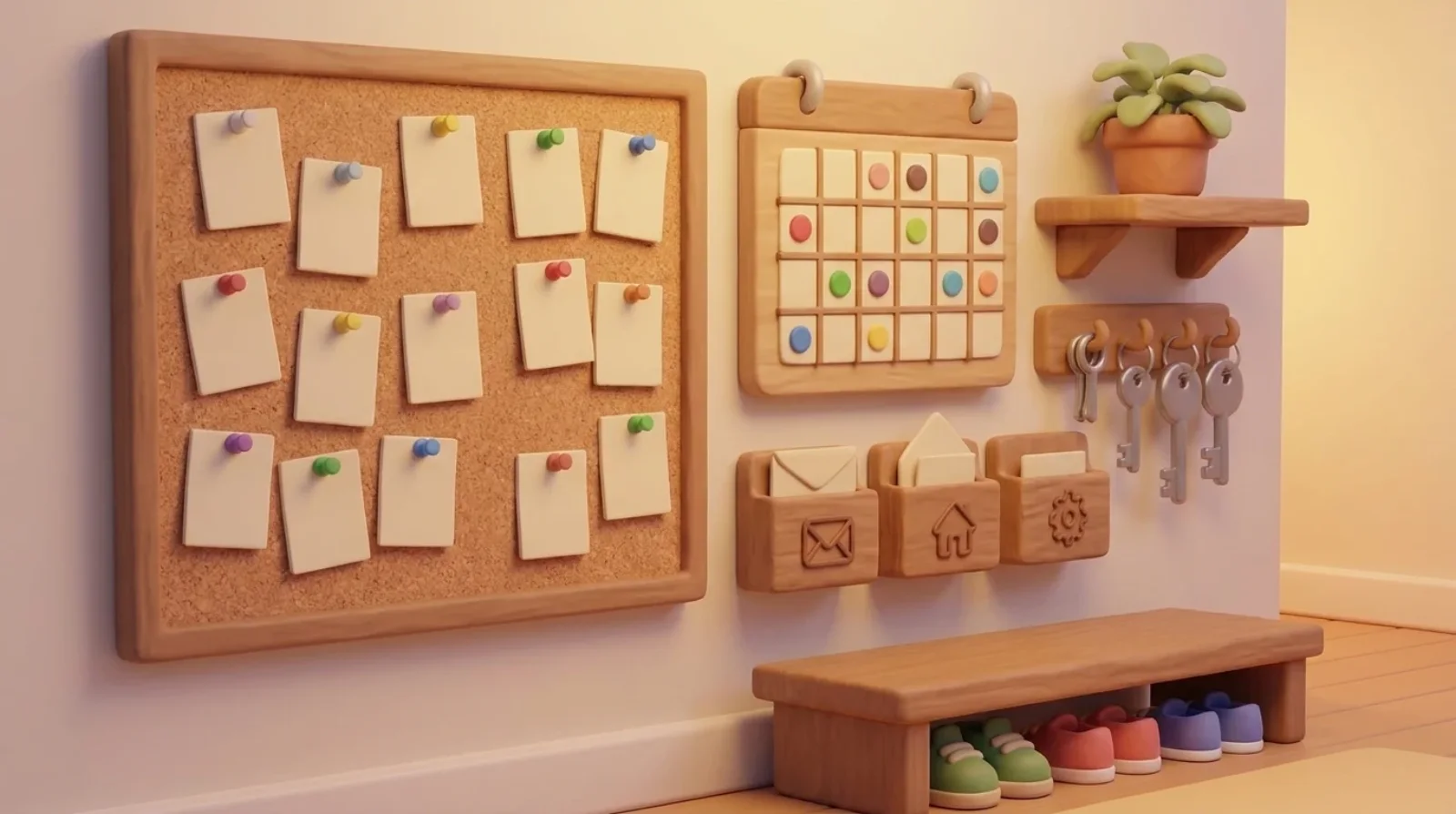
Family Command Center Ideas: Paper, Digital, or Both (2026)
Family command center ideas that actually keep your household organized. What to include, where to put it, and how to choose between a paper wall and a digital one.

Calm Down Corner Ideas: How to Build One That Actually Helps
Calm down corner ideas for kids that build real self-regulation — not time-out in disguise. What to include, how to use it, and the mistakes to avoid.

Back-to-School Routine: Rehearsal, Not Readiness (Free Countdown Checklist)
You have 5-7 days before school starts. Here's what actually matters — and what you can safely ignore. A back-to-school countdown, the 15-minute bedtime shift, and why one dry run is worth more than any supply list.

ADHD in the Kitchen: Why "What's for Dinner?" Is the Hardest Question of the Day
"What's for dinner?" — the hardest question of the day when you have ADHD. It's not about recipes. It's about executive dysfunction. A simple planning system that doesn't require a 7-step plan.

Time Blindness in the Family: When "5 Minutes" Means 45
"5 minutes" that lasts 45. Being late despite the best intentions. Time blindness is a core ADHD symptom — not laziness. How technology can help your family find a shared rhythm.
Teaching Kids About Money: The Checkout Line Is the Classroom
Money literacy doesn't come from lectures — it comes from real transactions. An age-by-age guide with sensory scenarios, Cambridge research, and one simple action to start this week.

Budget Meal Planning for Family: How Forty Small Drips Drain the Grocery Budget
Your grocery overspend isn't one big mistake — it's forty small decisions made tired and hungry. How a weekly meal plan plugs the leaks, with a spend tracker and concrete tactics.
Family Screen Plan: How to Create Rules That Actually Work (Without Daily Fights)
Stop counting minutes. Instead of negotiating over the phone every day, build a SHARED screen plan with your partner and your kids. A ready-made template + the AAP's 5 principles. No lecturing.

Slow Parenting 2.0: How Technology Can Help You Slow Down (Instead of Speeding Up)
Slow parenting doesn't mean giving up technology. The paradox: the right technology can help you SLOW DOWN. 5 principles of calm parenting in the AI era + tools.

ADHD in the Family: When Everyone Forgets
74% heritability of ADHD means if a child has ADHD, the parent likely does too. Most guides say "get organized." This one says: build a system that organizes itself for you.

Household Budget Template (Free, Ready to Copy) + How to Use It
'Are we okay this month?' — the question a household budget should answer in 10 seconds. Free copy-paste template, the 50/30/20 rule as a starting shape (not a cage), and a step-by-step for filling it in together.

Generation Beta: Your Child Will Be Born Into a World Where AI Already Exists. And That's OK.
Children born from 2025 onward are Generation Beta — the first generation for whom AI is simply a given. What does that change? Practical principles for raising kids in the age of artificial intelligence. No panic.

Family in the Age of AI: How to Prepare for What's Coming Anyway
AI is already in your home. 40% of children have a tablet before their 2nd birthday. Instead of panicking — get ready. A practical guide: what to do, what to avoid, how to talk to your kids about AI.
The Phone Can Wait: Why 145,000 Families Promised Each Other Not to Give Kids Smartphones
145,000 American families have promised not to give their kids smartphones until 8th grade. In Poland, nobody is talking about it. Research from Norway: bullying dropped by 46%. Is it time to start this movement here?

ADHD and Technology: How to Spot an App That Respects Your Brain
Most apps aren't designed for the ADHD brain. A 10-point checklist: find out whether your app supports you or overwhelms you. No lecturing.

Calm AI: When Artificial Intelligence Soothes Instead of Scares
Calm AI is an approach to AI that informs instead of alarming. 57% of adults feel stress related to AI (APA, 2025). Learn the 5 traits of calm AI + a diagnostic test.

Monthly Budget for a Family of Four: A Realistic Breakdown (+ How to Adapt It)
A realistic sample monthly budget for a family of four -- broken down by category, with sensory context and a simple method to adapt every number to your own income, city, and kids' ages.

Christmas Planner: The List Behind the List (Free Template)
The holiday mental load isn't the tasks — it's the tracking of the tasks, and it always falls on one person. A free Christmas planner template for gifts, budget, to-dos, and the family schedule.

Family Vacation Packing List (By Category): The Calm Checklist
A family vacation packing list organized by category so nothing gets forgotten. Copy-paste checklist inside — plus the shared-list upgrade that kills the night-before packing loop.

Holiday Gift Tracker: The Template That Stops Two Parents From Buying the Same Thing
A free copy-paste gift tracker with the four columns that prevent every gift-season disaster. Stop double-buying, budget drift, and the silent coordination tax on the default parent.

How to Organize Family Life? A Practical Guide for 2026
Proven methods to organize your family life in 2026. Shared calendar, meal planning, budgeting, household chores — step by step, no pressure. Checklist + tools included.

What Is a Family Operating System? The Complete Guide for 2026
A Family Operating System (Family OS) coordinates calendars, meals, budget, health, and tasks for the whole family in one encrypted place. Learn what it is, why it matters, and how it differs from simple family apps.

I Installed OpenClaw — What Does an AI Agent Know About Your Family?
An AI agent like OpenClaw has access to your files, passwords, and data — but also to your family's data. 3 questions worth asking before giving an AI agent access to a shared computer.

If You're Not Paying, You're the Product. But What About Your Child?
Free family apps make money from your data. Check in 5 minutes how your app treats your family's data — with a 7-question Privacy Audit checklist.

Who Sees Your Family's Data? 7 Layers You Don't Need to Worry About
Your family's health and financial data lives in an app — who can see it? 7 questions to ask any family app + how ParentOS protects your data with end-to-end encryption and a key that stays on your device.

Organic Software: How to Read an App's Ingredient Label
Organic software means apps with minimal data collection and E2EE. Audit your family app in 5 questions — like reading a yogurt label, but for technology.

What Does Your Child's Learning App Know About Them?
Free educational apps collect behavioral data, location, and advertising identifiers from your child. A 7-question checklist + a ready-made email template for your school — check privacy in 5 minutes.

Slow Tech: When Technology Slows Down Instead of Speeding Up
Slow Tech is a technology movement inspired by Slow Food — fewer notifications, more calm. 5 principles of calm technology for families + a ready-made conversation script for talking to your partner.

End-to-End Encryption for Families: A Jargon-Free Guide
What is end-to-end encryption and why does it protect your family's data? A simple 3-question test in 60 seconds — find out if your app truly encrypts health and financial data.

8 Best Family Organization Apps in 2026
We tested dozens of apps and picked the 8 that actually work. Plus 5 questions at the end to help you choose the right one for your family.