RSD in ADHD Parents: Why Forgetting Something Small Feels Like a Catastrophe
Pillar: Neurodivergent Families | Reading time: ~7 min As of: July 2026
TL;DR: If a small slip — a forgotten kit, being late for pickup — leaves you feeling like the worst parent alive for the rest of the day, it might be RSD: rejection sensitive dysphoria. Not oversensitivity. A mechanism often described in adults with ADHD, where the brain responds to criticism with pain out of all proportion to the situation. It’s not a formal diagnosis, but it’s real. You can work with it — starting with one thing: offloading memory, so there are fewer situations that trigger the pain.
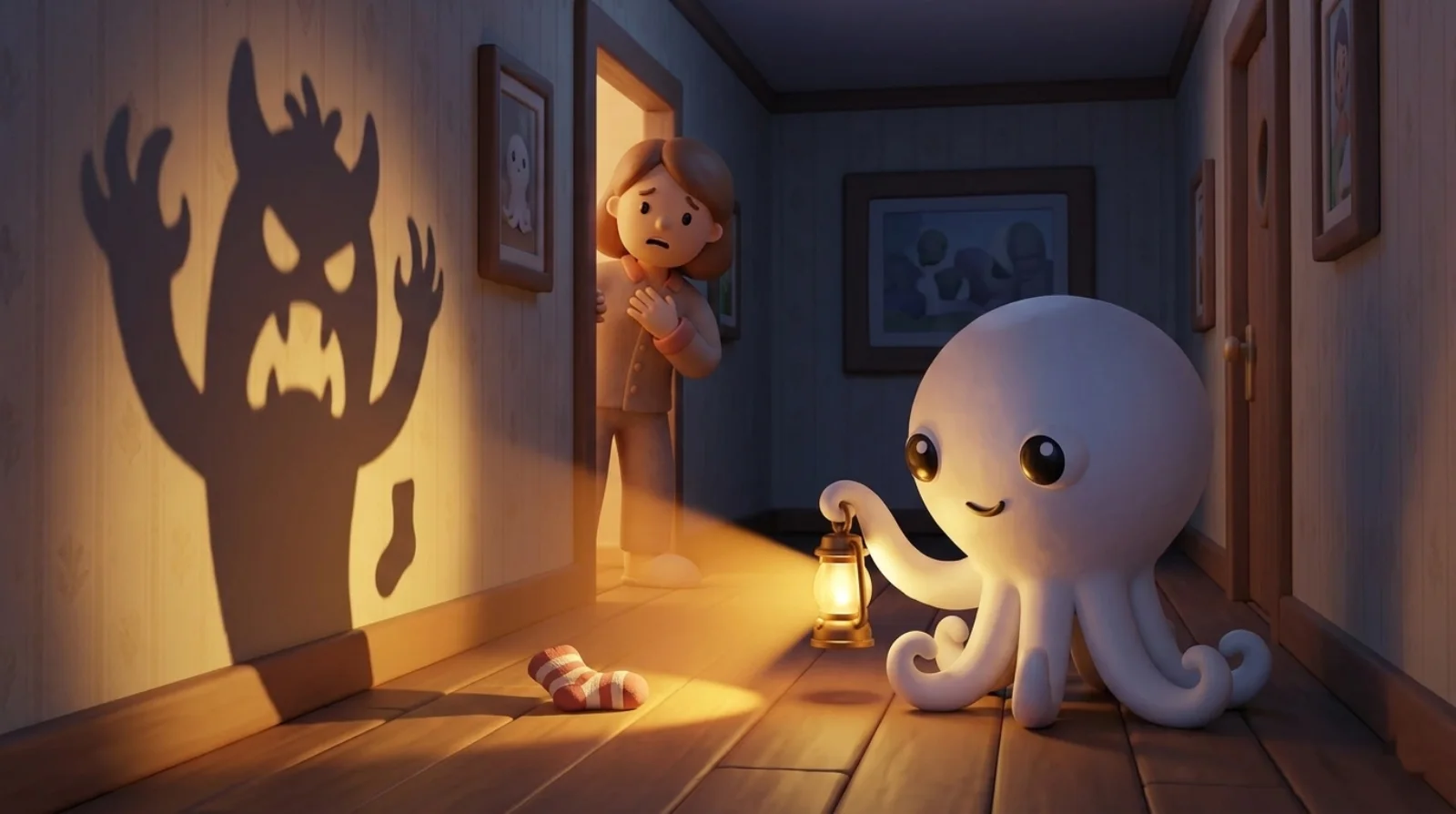
The Forgotten Gym Kit
You pick your child up from school. The teacher says, calmly, without a hint of malice: “Today was sports day, but Zosia didn’t have her kit, so she sat it out.”
One sentence. Neutral. And your face goes hot, your throat tightens, and for the rest of the afternoon one loop runs in your head: how could I forget, all the other mothers remembered, I’m hopeless, my child sat alone because of me.
In the evening, long after Zosia has forgotten the whole thing, you’re still living it. Replaying that sentence. Feeling it in your body.
This isn’t a reaction proportional to a forgotten kit. And you probably know that — which does nothing to make it easier to stop.
What RSD Is (Rejection Sensitive Dysphoria)
RSD — rejection sensitive dysphoria — is a term for an extremely intense, sometimes almost physically felt, emotional reaction to rejection or criticism. The key word: perceived or real. The brain doesn’t distinguish neutral feedback from an attack — it treats both like a threat.
The term was introduced by psychiatrist Dr. William Dodson, describing patients with ADHD (ADDitude Magazine). By his clinical observation, nearly all adults with ADHD recognize this experience in themselves, and about a third name it as their most impairing symptom (ADDitude Magazine). It’s worth remembering these are one clinician’s observations, not population-study data.
But it’s worth being honest here: RSD is not a separate diagnosis or part of the official ADHD criteria. It’s a clinical description, widely discussed among therapists and in ADHD communities, but still thinly supported by rigorous research (Psychology Today). You don’t need a “diagnosis of RSD” to recognize yourself in this description — or for what you feel to be real.
Why It Hits ADHD Parents Specifically
Because two mechanisms meet here that are hard on their own and, together, form a trap.
The first is executive dysfunction — the core ADHD difficulty with working memory, planning, and holding a sequence of tasks. It’s why the gym kit stays home despite the best intentions. It’s the same mechanism we described in time blindness in families: not a lack of care, just neurology.
The second is rejection sensitivity. And here it gets cruel: a parent with ADHD more often forgets small things, and at the same time feels each forgetting more intensely. More triggers, stronger reaction. This isn’t a matter of character or “oversensitivity” — it’s a pattern that therapists and people with ADHD describe strikingly similarly, even as the science is only beginning to map it.
In a family where ADHD isn’t the exception but the norm (and with 74% heritability it often is), this loop can circle between generations.
This Isn’t Oversensitivity
It’s worth saying plainly, because you’ve probably heard the opposite your whole life: “don’t overreact,” “you take it too personally,” “nobody’s attacking you.”
The RSD reaction isn’t a choice. You’re not “taking something too personally” — your nervous system responds to a stimulus with a force you don’t consciously regulate. It’s the difference between “you could try harder” and “your brain processes this differently.” The second version is closer to the truth — and, importantly, it lifts the weight of blame without taking away your agency.
Because the agency is there. It just sits somewhere other than where the shame points.
If you’re reading this and something shifted inside you — that’s enough for now. You don’t have to do anything about it today. Just knowing it has a name, and that it isn’t your fault, is the first step. The rest can wait.
What Helps
Not a seven-step self-improvement plan. Three shifts — each one small.
1. Separate the fact from your worth. A forgotten kit is a fact (“the child didn’t have their kit”). It’s not a verdict on you as a parent (“I’m hopeless”). RSD fuses the two instantly. The practice is to pull them apart — sometimes literally, saying out loud: “I forgot the kit. It happens. It doesn’t mean I’m a bad parent.”
2. Name the reaction as it arrives. “Oh, this is RSD” — the naming itself creates a millimeter of distance between you and the wave. It doesn’t stop it, but it reminds you that it passes, and that it’s a reaction, not a fact about your worth.
3. Reduce the number of triggers. This is the most practical and most often skipped. If fewer things fall out of memory, there are fewer situations that set off the spiral. And memory can be offloaded externally — it doesn’t have to hang in your head.
Where Willpower Ends and a System Begins

The hardest truth about ADHD is that willpower doesn’t cure executive dysfunction. You can promise yourself you’ll “remember this time” — and it won’t work, because the problem isn’t in your intentions. It’s in a mechanism that fails regardless of how much you care.
That’s why one of the most effective ways to reduce the number of slips is memory outside your head. A shared picture of the day where “gym kit on Wednesday” simply is — visible to the whole family, not something for one overloaded person to remember.
But the form of that memory matters. Because a classic to-do list with a growing counter of red, overdue items can do exactly the opposite — every “not done” is another signal of failure, another RSD trigger. A tool meant to help turns into a shame machine.
We design ParentOS around the principle Calm over alarm: no red alarms on routine tasks, no “you forgot again,” no judgment. An unfinished task is information, not a reproach. AI here plays the role of an external, non-judgmental memory — the kind that doesn’t sigh with disappointment when something slips. Because your brain isn’t broken. It’s the tools that are sometimes badly designed.
An external, shared family memory — one glance at the day, no reproach: parentos.ai.
Key Takeaways
- RSD is an extremely intense reaction to criticism or rejection — real or merely perceived. Often described in adults with ADHD, though it isn’t a formal diagnosis.
- It isn’t oversensitivity — it’s a pattern many people with ADHD describe independently, not a choice or a character flaw.
- ADHD parents get hit twice — they more often forget small things and feel each forgetting more intensely.
- Three shifts help — separating fact from worth, naming the reaction, and reducing triggers by offloading memory.
- The form of the tool matters — a list of red overdue items catalyzes shame; a calm, non-judgmental external memory disarms it.
If rejection-sensitivity reactions seriously disrupt your daily life, it’s worth talking to a psychiatrist or therapist — especially about diagnosing and treating the ADHD itself. This article is support, not a substitute for a consultation.
Related reads
- ADHD in the Family: When the Whole Family Forgets
- Time Blindness in Families: When “5 Minutes” Means 45
- How to Share Mental Load With Your Partner
Sources
[1] Dodson, W. — Rejection Sensitive Dysphoria and ADHD, ADDitude Magazine
[2] Attention Deficit Disorder Association (ADDA) — Rejection Sensitivity: Managing Feelings of Overwhelm and Rejection as an Adult with ADHD
[3] Rejection Sensitivity Dysphoria: The Actual Research, Psychology Today — on the limits of the evidence base
Calm families start with awareness.