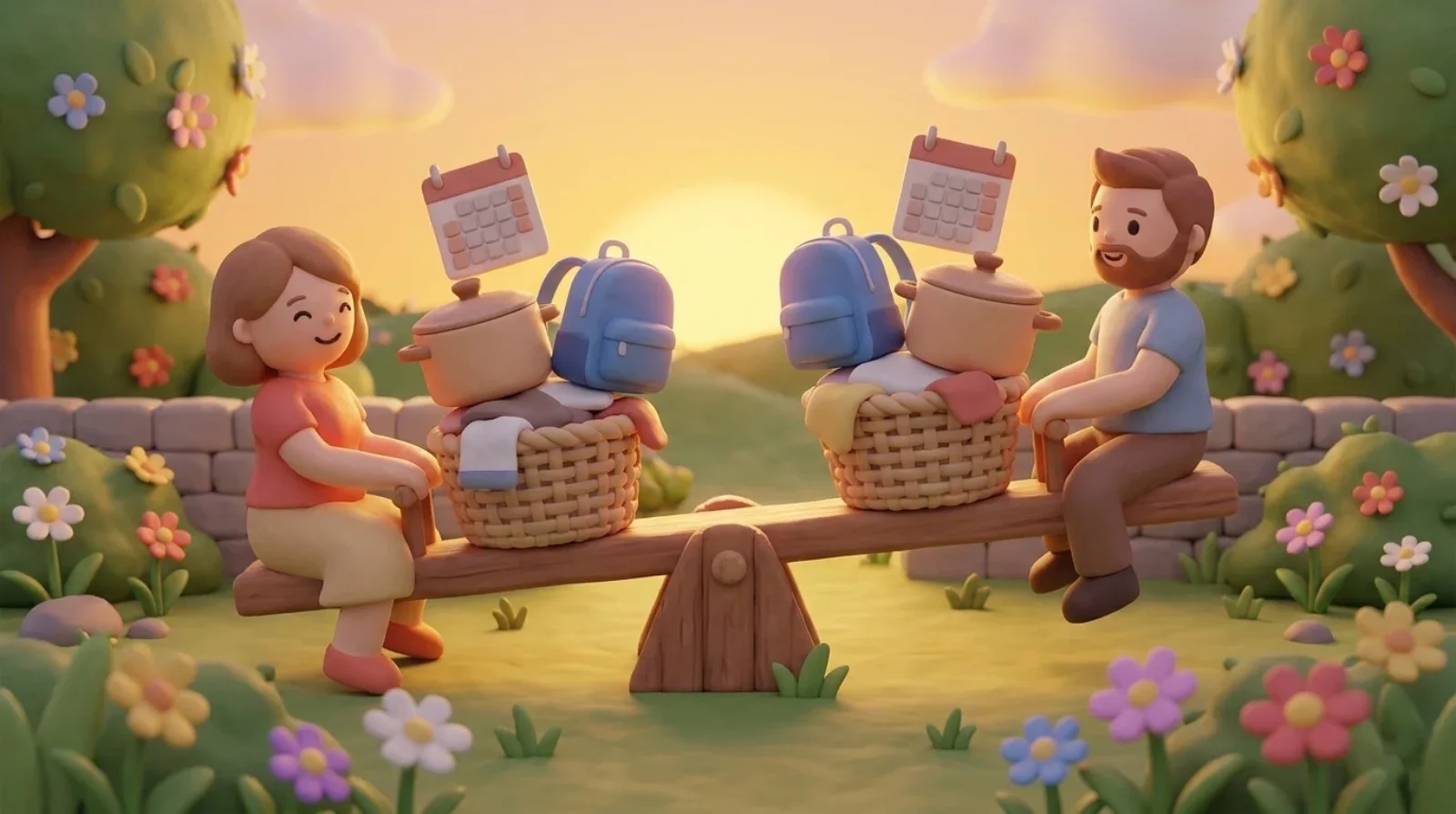
Die Fair-Play-Methode + Technik: Wie man sie wirklich umsetzt
Kurz gesagt: Eve Rodskys Fair Play benennt das Problem der unsichtbaren Arbeit brillant — aber die Karten landen bis zur dritten Woche in der Schublade, weil das System aufrechtzuerhalten zur eigenen kognitiven Last wird. Technik schließt die Lücke, indem sie automatische Conception übernimmt (Bedürfnisse bemerken, bevor es jemand muss), gemeinsame Planning (für beide Partner sichtbar, ohne dass eine Person zur Informationszentrale wird) und Execution-Überwachung ohne Überwachungsgefühl. Unten: wie CPE tatsächlich funktioniert, warum manuelle Systeme ins Stocken geraten, drei Technik-Brücken, eine Vergleichstabelle und ein Eine-Karte-Experiment für diese Woche.
Du hast die Karten gekauft. Du hast den Küchentisch abgeräumt, nachdem die Kinder im Bett waren — Tassen beiseitegeschoben, Krümel auf den Boden gewischt. Eine:r von euch las die Bereichsnamen laut vor. Die:der andere sortierte sie in Stapel: meins, deins, lass uns reden. Das Sortieren selbst fühlte sich produktiv an. Du konntest spüren, wie die Anspannung in den Schultern nachließ. Irgendwo bei Karte vierzig wurdet ihr beide still. Der „lass uns reden“-Stapel wurde hoch.
Bis Mittwoch waren die Karten in einer Schublade.
Die Ungerechtigkeit hatte sich nicht bewegt. Sie war nur benannt worden.
Wenn das in deinem Haushalt passiert ist, hat Fair Play nicht versagt. Es hat genau das getan, wofür es gemacht ist — und dann brauchtest du etwas, das es nicht liefern sollte. Ich schreibe über genau diese Lücke und darüber, wie Technik sie aus meiner Sicht schließen kann, ohne das zu ersetzen, was ich an Fair Play schätze.
Was ist die Fair-Play-Methode und warum ist sie wichtig?
ParentOS, eine Familienorganisations-App, die die mentale Last der Elternschaft verringern soll, habe ich um dasselbe Problem herum gebaut, das Eve Rodsky identifizierte: Ein Elternteil trägt den Großteil der unsichtbaren Arbeit, und keiner der Partner hat eine gemeinsame Sprache, um sie zu beschreiben. Fair Play liefert diese Sprache. Technik liefert die Infrastruktur, um sie zu tragen.
Eve Rodsky veröffentlichte Fair Play 2019, nachdem sie mehr als 500 Paare dazu befragt hatte, wie sie häusliche Arbeit aufteilen. Was sie fand, war nicht überraschend — ein Partner (meist die Mutter) trug einen unverhältnismäßigen Anteil. Überraschend war, dass die meisten Paare nicht benennen konnten, was „der Großteil der Arbeit“ bedeutete. Die Arbeit war sogar für die ausführende Person unsichtbar.
Ihre Lösung: 100 Karten, die jeden Bereich des Haushaltsmanagements repräsentieren — von „Mittagessen unter der Woche“ über „Geburtstagsfeiern“ bis „Autowartung“. Aber der eigentliche Beitrag waren nicht die Karten. Es war das CPE-Modell.
Das CPE-Modell: Conception, Planning, Execution
Conception (Wahrnehmen) bedeutet zu bemerken, dass ein Bedarf besteht. Das Shampoo geht zur Neige. Nächste Woche ist Fototag. Die Kfz-Zulassung läuft in einem Monat ab.
Planning (Planen) bedeutet zu entscheiden, was zu tun ist. Welches Shampoo zu kaufen. Was das Kind anziehen soll. Ob online oder vor Ort zu verlängern.
Execution (Ausführen) bedeutet, die Aufgabe zu erledigen. In den Laden gehen. Das Outfit hinlegen. Das Verlängerungsformular einreichen.
Vor Fair Play „teilten“ die meisten Paare Aufgaben, indem sie nur die Execution aufteilten. Ein Partner bemerkte, dass das Shampoo knapp war (Conception), entschied, welche Marke zu kaufen (Planning), schrieb es auf die Liste (mehr Planning) und bat dann die:den andere:n, es im Laden mitzunehmen (Execution). Diese:r fühlte, dass sie:er half. Die:der erste fühlte, dass sie:er alles tat. Beide sagten die Wahrheit — sie maßen nur unterschiedliche Phasen.
Fair Plays Regel ist streng: Wenn du eine Karte hältst, hältst du alle drei Phasen. Keine Teilverantwortung. Kein „hol es einfach für mich mit“. Das deckt sich genau mit dem, was die Soziologin Allison Daminger in ihrer 2019 im American Sociological Review veröffentlichten Forschung identifizierte — vier Stufen kognitiver Haushaltsarbeit: Antizipation, Identifikation, Entscheidung und Überwachung. Rodskys Conception deckt die Antizipation ab. Ihr Planning deckt Identifikation und Entscheidung ab. Ihr Execution schließt das Überwachen ein.
Für mich macht genau diese Übereinstimmung mit begutachteter Forschung Fair Play zu mehr als einer Selbsthilfe-Übung. Es ist eine praktische Übersetzung soziologischer Erkenntnisse in etwas, nach dem Paare am eigenen Küchentisch handeln können.
Warum gerät Fair Play nach der ersten Woche ins Stocken?
Fair Play benennt das Problem und weist Verantwortung brillant zu, erfordert aber fortlaufenden manuellen Aufwand zur Aufrechterhaltung. Das System, das kognitive Arbeit verteilen sollte, wird zur eigenen kognitiven Last — und diese Last landet meist beim ohnehin überlasteten Partner. Stand April 2026 bleibt diese Umsetzungslücke der häufigste Grund, warum Paare die Methode aufgeben.
So läuft es typischerweise ab:
Woche eins. Beide Partner sind engagiert. Karten sind sichtbar — am Kühlschrank, auf der Arbeitsplatte, wo immer ihr sie hingelegt habt. Die Verantwortung ist klar. Der Partner, der sonst alles trägt, spürt etwas Körperliches: ein Lockern in der Brust, als hätte er eine Tasche abgesetzt, von der er nicht wusste, dass er sie umklammert hielt.
Woche drei. Das Leben kommt dazwischen. Ein Kind wird krank. Arbeitsfristen stapeln sich. Die Karten wurden nicht überprüft. Einige neu zugewiesene Aufgaben sind still zum Default-Elternteil zurückgedriftet, weil die:der neue Verantwortliche die Conception-Phase verpasst hat. Nicht absichtlich. Das System hat sie:ihn nur nicht angestupst.
Woche sechs. Ein Partner — fast immer derjenige, der Fair Play initiiert hat — merkt, dass er jetzt zwei Systeme managt: den Haushalt selbst und das Fair-Play-Modell, das ihn verteilen sollte. Er leistet Meta-Arbeit. Verwaltet die Verwaltung.
Ich halte das nicht für einen Fehler in Fair Plays Logik. Die Logik ist stimmig. Es ist eine Umsetzungslücke — der Abstand zwischen dem Verstehen einer Lösung und dem täglichen Aufrechterhalten.
Es gibt auch ein Volumenproblem. Fair Play verteilt kognitive Arbeit neu, reduziert sie aber nicht. Wenn dein Haushalt 100 Aufgaben an Mental Load erzeugt, kann Fair Play sie 50/50 aufteilen. Du hast immer noch 100 Aufgaben. Wer vorher 80 trug, trägt jetzt 50 — eine echte Verbesserung, aber das Gesamtgewicht bleibt unverändert.
Wie Technik die Fair-Play-Umsetzungslücke schließt
Technik kann Fair Plays Philosophie nicht ersetzen. Aber sie kann die drei Dinge übernehmen, die Fair Play nie liefern sollte: automatische Conception (Bedürfnisse bemerken, bevor es jemand muss), gemeinsame Planning (für beide Partner sichtbar, ohne dass eine Person zur Informationszentrale wird) und Execution-Überwachung (ohne Überwachung oder Nörgeln).
Die Lücke hat nichts mit Willenskraft zu tun. Es geht um Infrastruktur.
Brücke 1: Automatisierte Conception
Conception — zu bemerken, dass ein Bedarf besteht — ist die kognitiv teuerste Phase von CPE. Sie läuft den ganzen Tag als Hintergrundprozess im Kopf eines Elternteils. Kam die Einverständniserklärung zurück? Ist der Zahnarzttermin überfällig? Wann verlängert sich die Kfz-Versicherung? Dieses leise Summen, alles im Blick zu behalten, ist das, was Forschende kognitive Arbeit nennen, und es ist gerade deshalb erschöpfend, weil es nie aufhört.
Technik beginnt, das zu übernehmen. Kalender-Tools markieren Terminkonflikte Tage im Voraus. Einkaufsplattformen verfolgen Nachbestellzyklen. Einige neuere Familienplattformen, darunter ParentOS, das ich baue, zielen darauf ab, Antizipation über mehrere Bereiche hinweg in einer gemeinsamen Ansicht zu bündeln.
Die entscheidende Verschiebung: Wenn Technik die Conception übernimmt, behält der kartenhaltende Elternteil weiterhin Planning und Execution. Aber er braucht keinen Hintergrundprozess mehr im Kopf. Die kognitiven Kosten, eine Karte zu halten, sinken von ständiger Wachsamkeit auf periodisches Entscheiden.
Lass die Schultern sinken. Lockere den Kiefer. Dieses Hintergrundsummen kann leiser werden.
Brücke 2: Gemeinsame Planning-Sichtbarkeit
In einem manuellen Fair-Play-Setup weiß jeder Partner, was er besitzt — aber keiner hat ein Live-Bild des gesamten Systems. Wenn ein Partner in einer schweren Woche untergeht und der andere Kapazität hat, gibt es keine Möglichkeit, dieses Ungleichgewicht zu sehen, ohne ein Gespräch anzustoßen. Das Gespräch selbst ist Arbeit.
Eine gemeinsame digitale Ansicht ändert das, ohne deinen Haushalt in ein Leistungs-Dashboard zu verwandeln. Beide Partner sehen dieselben Informationen: was ansteht, wer es besitzt, in welcher Phase es ist. Nicht als Überwachungswerkzeug — als Wetterbericht. Du wirfst einen Blick darauf, so wie du aus dem Fenster schaust, bevor du das Haus verlässt.
Das ist grundlegend anders als eine gemeinsame To-do-Liste. Eine To-do-Liste verfolgt Execution. Eine gemeinsame Planungsansicht verfolgt alle drei CPE-Phasen. Du siehst nicht nur, was zu tun ist, sondern auch, worüber nachzudenken und was zu entscheiden ist. Diese Sichtbarkeit ist es, die verhindert, dass sich das Default-Elternteil-Muster still wieder durchsetzt.
Brücke 3: Execution-Überwachung ohne Überwachung
Eines von Fair Plays stärksten Prinzipien ist, dass die:der Kartenhalter:in die Dinge auf ihre:seine Weise tut. Wenn dein Partner „Mittagessen unter der Woche“ besitzt, darfst du das Menü nicht kritisieren. Verantwortung bedeutet Autonomie.
Aber hier ist die Spannung: Wenn niemand prüft, ob Karten tatsächlich gehalten werden, zerfällt das System still. Und wenn ein Partner den anderen überwacht, stellt das die Manager-Angestellten-Dynamik wieder her, die Fair Play eigentlich beseitigen sollte.
Ich bin überzeugt, dass Technik diese Nadel durchfädeln kann. Ein System kann verfolgen, ob die wiederkehrenden Bedürfnisse eines Bereichs adressiert werden — nicht, ob sie „richtig“ adressiert werden. Wenn das Schul-Mittagessen bis Sonntagabend nicht vorbereitet ist, geht ein sanfter Hinweis an die:den Kartenhalter:in. Nicht an den Partner. Nicht mit Alarm. Nur ein früher, ruhiger Stups.
Das ist der Unterschied zwischen Überwachung im Sinne von Begleitung und Kontrolle. Begleitung fragt „ist das auf Kurs?“ Kontrolle fragt „machst du es richtig?“ Das erste stützt Autonomie. Das zweite untergräbt sie.
Fair Play manuell vs. technikgestützt: ein Vergleich
| Aspekt | Fair Play (manuelle Karten) | Fair Play + Technik |
|---|---|---|
| Conception | Ein Partner bemerkt Bedürfnisse im Kopf | System bemerkt Bedürfnisse proaktiv |
| Planning | Jede:r plant unabhängig | Planung für beide Partner sichtbar |
| Execution | Verantwortliche:r erledigt die Aufgabe | Verantwortliche:r erledigt; System verfolgt sanft |
| Karten-Reviews | Manuell — jemand muss anstoßen | Automatisch — System markiert Abdriften |
| Verantwortungs-Abdriften | Unsichtbar, bis Groll wächst | Früh sichtbar über gemeinsame Ansicht |
| Meta-Arbeit | Fällt auf den initiierenden Partner | Vom System übernommen |
| Datenschutz | Karten am Kühlschrank (physisch) | Variiert — prüfe die App-Datenschutzerklärung |
| Einrichtung | Ein Gespräch (30–60 Min.) | Schrittweise über 1–2 Wochen |
| Nachhaltigkeit | Erfordert aktive Pflege | Selbsttragend mit periodischer Überprüfung |
Ich halte keine der Spalten für generell besser. Manche Familien bevorzugen das greifbare Ritual physischer Karten. Andere brauchen die Infrastruktur eines digitalen Systems. Den meisten würde ich raten, mit den Karten zu beginnen, um die Philosophie zu verstehen, und dann Technik darüberzulegen, um sie zu tragen.
Worauf du bei einer Fair-Play-kompatiblen App achten solltest
Nicht jede Familien-App unterstützt die Fair-Play-Philosophie. Stand April 2026 sind die meisten Haushalts-Apps aufgehübschte To-do-Listen — du kannst Aufgaben zuweisen und abhaken. Das deckt Execution ab und sonst nichts.
Drei Kriterien, die ich zu prüfen empfehle:
1. Bereichsverantwortung, nicht nur Aufgaben-Delegation. Die App sollte dir erlauben, zusammengehörige Verantwortlichkeiten zu gruppieren — „Schulkommunikation“, „Essensplanung“, „Haushaltsinstandhaltung“ — unter einer:einem Verantwortlichen. Wenn sie nur einzelne Posten abbildet („Milch kaufen“, „Lehrkraft mailen“), stellt sie das Delegationsmuster wieder her, das Fair Play durchbrechen wollte. Apps wie Cozi und FamilyWall bieten gemeinsame Listen und Kalender, was ein Anfang ist, aber echte Bereichsverantwortung bedeutet, dass eine Person C, P und E für den gesamten Bereich hält.
2. Proaktive Antizipation, nicht nur Erinnerungen. Es gibt einen bedeutsamen Unterschied zwischen „Zahnarzttermin morgen“ (wusstest du schon, hast du schon geplant) und „der letzte Zahncheck ist 6 Monate her — Zeit für einen Termin?“ (das System hat die Conception für dich übernommen). Die meisten Apps sitzen klar auf der Erinnerungs-Seite. Ein paar neuere Werkzeuge — E-Mail-Parser, KI-Kalenderassistenten und integrierte Familienplattformen — bewegen sich ins proaktive Terrain.
3. Gemeinsame Sichtbarkeit ohne Prüfprotokolle. Beide Partner sollten das ganze Bild sehen, ohne dass eine:r zur:zum Prüfer:in wird. Aktivitätsprotokolle, die zeigen, „wann dein Partner die App zuletzt geöffnet hat“, stellen die Manager-Angestellten-Dynamik wieder her. Das Ziel ist gemeinsames Bewusstsein, kein Leistungsbericht. Und prüfe, wie die App mit deinen Familiendaten umgeht — Datenschutz ist wichtiger, als die meisten Eltern ahnen, wenn du Gesundheitsdaten, Stundenpläne und Finanzdetails in einem Familienwerkzeug teilst.
Eine Karte, zwei Wochen: ein Einsteiger-Experiment
Du brauchst keine App, um anzufangen. Du musst nicht alle 100 Karten sortieren. Du brauchst eine Karte und zwei Wochen.
So geht das Experiment:
- Wähle einen Bereich, den dein Partner derzeit nicht besitzt. Etwas Wiederkehrendes — „Frühstück unter der Woche“, „Haustierpflege“, „Schulkommunikation“. Keine einmalige Aufgabe.
- Übertrage die volle CPE-Verantwortung. Sprich die Worte aus: „Das gehört dir für zwei Wochen. Es bemerken, es planen, es tun. Ich werde nicht einspringen.“
- Spring wirklich nicht ein. Wenn du eine E-Mail von der Schule über den Fototag siehst, leite sie nicht weiter. Wenn die Cornflakes ausgehen, setze sie nicht auf die Liste. Diese Enge in der Brust, wenn du dich zurückhältst — das ist das Gefühl, Conception loszulassen. Es ist unangenehm. Das soll es sein.
- Nach zwei Wochen, sprecht darüber. Kein Leistungsbericht. Ein Gespräch: Was war schwerer als erwartet? Was machte das System (oder das fehlende System) schwierig? Wo hätte ein Stups durch Technik geholfen?
Wenn dieses Experiment alles ist, was du nach dem Lesen dieses Artikels tust, ist es aus meiner Sicht genug. Die gelebte Erfahrung, alle drei CPE-Phasen zu halten, lehrt beide Partner mehr, als es jedes Kartensortieren je könnte.
Ist Fair Play noch wichtig, wenn du Technik nutzt?

Ja. Ich halte Fair Play für eines der wichtigsten Modelle für Gerechtigkeit im Haushalt, die im letzten Jahrzehnt veröffentlicht wurden. Eve Rodsky gab Paaren ein gemeinsames Vokabular für unsichtbare Arbeit — Conception, Planning, Execution — und dieses Vokabular ist grundlegend. Keine App ersetzt das Gespräch, in dem ihr euch beide hinsetzt und laut sagt, wer eigentlich was trägt.
Aber ein Modell ist keine Infrastruktur. Der Abstand zwischen dem Verstehen eines Problems und dem täglichen Lösen ist dort, wo die meisten Paare ins Stocken geraten. Ich bin überzeugt, dass Technik, die um CPE herum gestaltet ist und nicht nur um Aufgabenverwaltung, diesen Abstand schließen kann.
Das Ziel ist nicht, das Gespräch zwischen Partnern abzuschaffen. Es ist, das Gespräch seltener und weniger erschöpfend zu machen. Wenn ein System die Antizipation übernimmt, Entscheidungen beiden Partnern gleichermaßen sichtbar macht und das Nachfassen sanft begleitet, ohne zu überwachen, dürfen die Paare, die dieses Kartensortieren am Küchentisch gemacht haben, ihren Fortschritt endlich behalten.
Die Karten müssen nicht in der Schublade bleiben.
Über die Autor:innen
Eryk Panter ist Gründer und leitender Entwickler von ParentOS. Als Software-Architekt und Vater von drei Kindern baut er Familienorganisations-Werkzeuge, geprägt von der unmittelbaren Erfahrung mit dem kognitiven Gewicht moderner Elternschaft. Sylwia Panter ist Mitgestalterin von ParentOS und bringt die Perspektive der täglichen Familienlogistik in jede Designentscheidung ein.
Weiterführende Beiträge: Wie du den Mental Load mit deinem Partner teilst | Bist du das Default-Elternteil? | Mental Load in Familien: Der vollständige Leitfaden
Ruhige Familien beginnen mit gemeinsamem Bewusstsein.