
ADHS in der Familie: Wenn alle alles vergessen
Lesezeit: ~6 Min. Stand: März 2026
Kurz gesagt (weil wir wissen, dass du vielleicht nicht bis zum Ende liest — und das ist in Ordnung)
Wenn deine Familie ADHS hat — ist es wahrscheinlich nicht nur eine Person. 74 % Erblichkeit bedeutet: Wenn ein Kind ADHS hat, hat wahrscheinlich auch ein Elternteil es. Die meisten Ratgeber sagen „organisier dich“. Dieser Artikel sagt: Bau ein SYSTEM, das sich für dich selbst organisiert.
Drei Dinge, die du mitnimmst:
- Warum ADHS eine Sache der ganzen Familie ist, nicht das Problem einer Person
- Warum „organisier dich einfach“ nicht funktioniert, wenn beide Eltern ADHS haben
- Drei konkrete Prinzipien, die helfen — ohne zu moralisieren
Montagmorgen
Das Kind findet seine Schuhe nicht. Dein Partner weiß nichts vom Elternsprechtag. Du hast vergessen, dass heute die Bibliotheksbücher fällig sind. Alle fragen einander „hab ich’s dir nicht gesagt?“ — und niemand erinnert sich, weil es niemand getan hat. Alle dachten, sie hätten es getan.
Spürst du diese Enge in der Brust? Dieses Zusammenziehen, das sagt „schon wieder“?
Das ist keine Unordnung. Das ist keine Faulheit. Das ist ADHS mal drei.
Warum ist ADHS eine Sache der ganzen Familie, nicht das Problem einer Person?
Beginnen wir mit der Zahl, die verändert, wie du über ADHS zu Hause denkst.
74 %. Das ist die Erblichkeit von ADHS laut genetischen Studien, die Tausende Familien umfassen (Faraone & Larsson, 2019). Es ist eine der höchsten Erblichkeiten unter den neurologischen Entwicklungsstörungen.
Was bedeutet das in der Praxis? Wenn dein Kind eine ADHS-Diagnose hat — ist es statistisch wahrscheinlich, dass auch ein oder beide Elternteile ADHS haben. Diagnostiziert oder nicht.
Die Daten sind eindeutig: ADHS betrifft weltweit 5–7 % der Kinder und 2,5–5 % der Erwachsenen (Faraone et al., 2021 — Konsens von 79 Expert:innen aus 27 Ländern, 208 evidenzbasierte Schlussfolgerungen). Weltweit sind das über 139 Millionen Erwachsene (Song et al., 2021).
Forschung der Harvard Medical School (Biederman et al., 2002) zeigt etwas Wichtiges: Wenn ein Elternteil ADHS hat, nehmen Familienkonflikte zu und der Familienzusammenhalt ab. Nicht, weil jemand ein „schlechtes Elternteil“ ist. Weil zwei oder drei Menschen mit exekutiver Dysfunktion versuchen, den Alltag gemeinsam zu managen — und niemand die Ressourcen hat, „die organisierte Person“ zu sein.
Und die meisten Artikel über ADHS? Sie sagen: „organisier dich“. Aber was, wenn die Person, die sich organisieren soll, auch ADHS hat? Und ihr Partner ebenfalls?
Das ist ein Perspektivwechsel: von „einer Person mit Diagnose“ zu „einem Familiensystem, das Unterstützung braucht“.
Pause
Du musst dir das nicht merken. Die wichtigen Teile sind fett. Du kannst morgen darauf zurückkommen. Oder nächste Woche. Es wird hier auf dich warten.
Warum „organisier dich einfach“ in einer Familie mit ADHS nicht funktioniert
Russell Barkley (1997) beschrieb es präzise: ADHS ist eine Störung der Verhaltenshemmung, die in einer Kaskade auf Arbeitsgedächtnis, Planung, Selbstregulation und inneres Sprechen übergreift. Es ist kein Problem mit einer Fähigkeit. Es ist ein Problem mit dem gesamten Selbstmanagement-System.
Sonuga-Barke (2003) fügte eine weitere Dimension hinzu: ADHS hat zwei Pfade. Der erste ist exekutive Dysfunktion — Schwierigkeiten mit Planung, Organisation, Arbeitsgedächtnis. Der zweite ist Aufschub-Aversion — das Bedürfnis nach Unmittelbarkeit, die Schwierigkeit zu warten. Verschiedene Menschen in der Familie können verschiedene Profile haben. Ein Kind kann nicht planen. Das andere kann nicht warten. Das Elternteil kann beides nicht gleichzeitig im Kopf halten.
Castellanos und Proal (2012) zeigten, dass ADHS eine Störung mehrerer Hirnnetzwerke ist — nicht nur des präfrontalen Kortex. Sie betrifft das Default Mode Network, das dorsale Aufmerksamkeitsnetzwerk und das frontoparietale Netzwerk. Deshalb betrifft ADHS alles auf einmal: Aufmerksamkeit, Motivation, Zeitgefühl, Emotionen.
Ratgeber gehen davon aus, dass jemand in der Familie „organisiert“ ist und das System führen kann. In einer Familie mit ADHS — gibt es oft keine solche Person. Und das ist kein Versagen. Das ist ein Ausgangspunkt.
Forschung von Harvard und JAMA (Safren, 2005; 2010) bringt Erleichterung: externes Gerüst ist therapeutisch. Werkzeuge, Systeme, Erinnerungen zu nutzen ist kein „Schummeln“. Es ist eine Strategie, die in klinischen Studien ADHS-Symptome, Angst und Depression bei Erwachsenen reduzierte.
Wie baut man gemeinsames Bewusstsein in einer Familie mit ADHS?
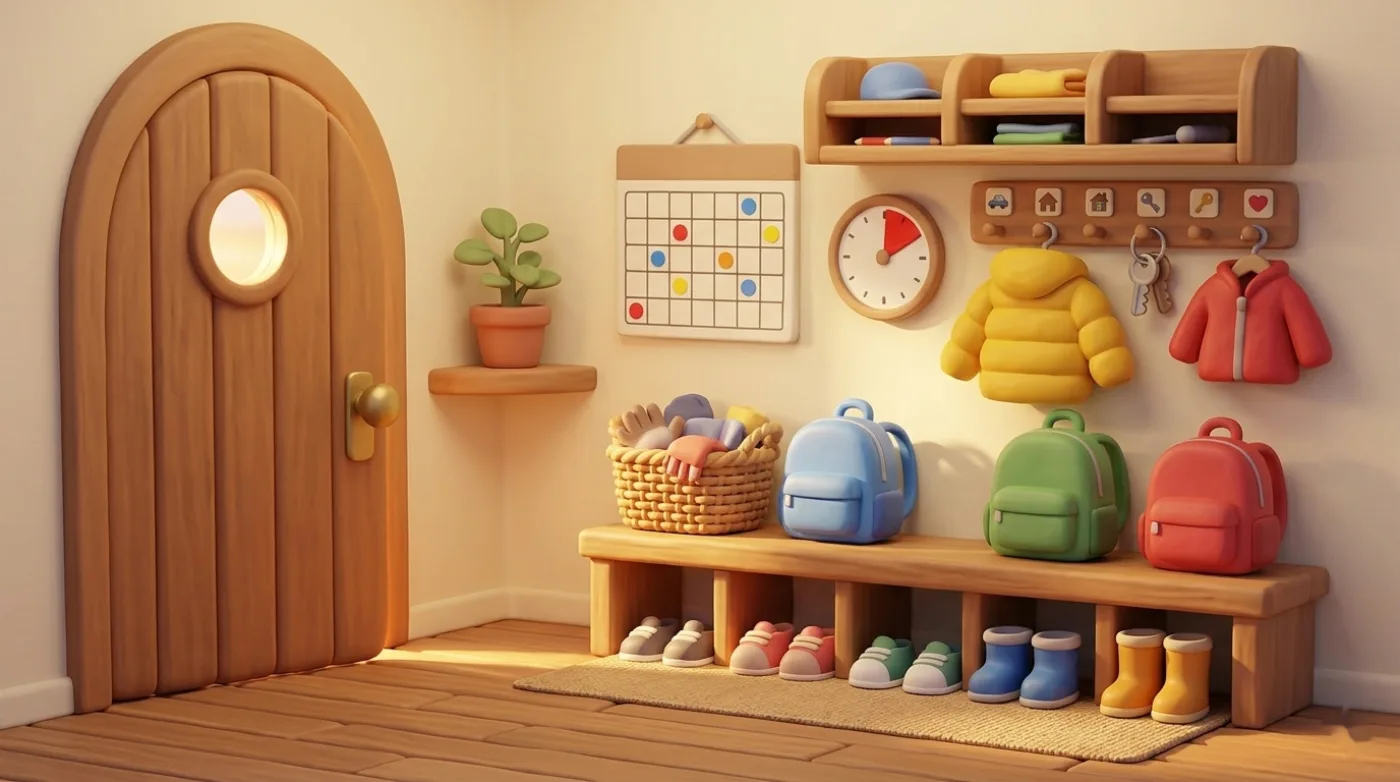
Hier kommen wir zum Kern. Wenn das individuelle Gedächtnis versagt — und in einer Familie mit ADHS versagt es regelmäßig — brauchst du gemeinsames Bewusstsein. Ein System, das für dich weiß.
Drei Prinzipien:
1. Eine einzige verlässliche Quelle
Statt vier Listen — in Mamas Kopf, ein Klebezettel am Kühlschrank, Notizen in Papas Telefon, das Schulportal — ein Ort, den alle sehen.
Klingt einfach. Aber in einer Familie mit ADHS ist das eine Revolution. Denn das Problem ist nicht, dass niemand etwas aufschreibt. Das Problem ist, dass alle an einem anderen Ort schreiben — und niemand weiß, was die andere Person weiß.
Ramsay und Rostain (2006) von der University of Pennsylvania bestätigen: externe Unterstützung — Werkzeuge, Systeme, Strukturen — ist keine Fußfessel. Sie ist eine Form von Therapie. Ihr Modell, das Pharmakotherapie mit modifizierter CBT kombiniert, konzentrierte sich darauf, die Umgebung zu ändern, nicht nur die Person.
2. Jemand trägt es für dich ein
Dein Partner fügt den Arzttermin hinzu. Oma trägt den Geburtstag des Enkelkinds ein. Das System erinnert an das Meeting. Dein Arbeitsgedächtnis — endlich — ruht.
Bond und Titus (1983) analysierten 241 Studien zur sozialen Erleichterung: Allein die Anwesenheit einer anderen Person verändert, wie wir Aufgaben erledigen. In der ADHS-Community ist das als „Body Doubling“ bekannt — jemand ist in der Nähe, und das genügt, damit das Gehirn aktiviert wird.
Gemeinsames Bewusstsein in einem System ist digitales Body Doubling. Du musst dich nicht allein erinnern. Jemand — oder etwas — erinnert sich mit dir.
3. Ruhige Zusammenfassungen statt Alarme
Ein morgendlicher Überblick über „was heute ansteht“ statt zwölf über den Tag verstreuter Push-Benachrichtigungen.
Warum ist das wichtig? Forschung zum Aufmerksamkeitswechsel (2000) zeigte, dass Menschen mit ADHS deutlich höhere Umschaltkosten haben als neurotypische Menschen. Jede Benachrichtigung ist keine „schnelle Sekunde“. Es ist, aus dem Kontext gerissen zu werden, den Faden zu verlieren, fünf Minuten, um zurückzufinden. Multipliziere das mit zwölf am Tag.
Das ADHS-Gehirn zahlt einen höheren Preis für jede Unterbrechung. Ruhe ist kein Luxus. Sie ist eine Notwendigkeit.
Schnell-Check: Ist euer Familienorganisationssystem ADHS-freundlich?
Drei Fragen. Keine Wertung.
- Hat ein Ort alle wichtigsten Informationen der Familie?
- Kann jemand anderes als du hinzufügen und aktualisieren?
- Funktioniert das System, wenn du es 3 Tage nicht prüfst?
Wenn du auf alle „ja“ geantwortet hast — fantastisch. Wenn nicht — ist es nicht deine Schuld. Die meisten Werkzeuge sind nicht für Familien gestaltet, in denen mehr als eine Person ADHS hat.
Pause — du kannst hier aufhören
Ernsthaft. Wenn dir das, was du bisher gelesen hast, etwas Wertvolles gegeben hat — großartig. Der Rest wird morgen hier sein. Du musst nicht alles auf einmal aufnehmen.
Wenn du konkrete Schritte willst — lies weiter.
Was du MORGEN tun kannst (nicht heute)
Nicht heute. Heute genügt es, dass du das gelesen hast. Morgen — drei Mikro-Schritte.
1. Wähle EINEN Ort für gemeinsame Informationen.
Ein Zettel am Kühlschrank zählt. Eine gemeinsame Notiz im Telefon zählt. Eine Pinnwand zählt. Das Format spielt keine Rolle. Wichtig ist, dass es einer ist und dass ihr beide wisst, dort nachzuschauen.
2. Sag deinem Partner einen Satz.
„Wenn du hier etwas Wichtiges aufschreibst, muss ich es nicht im Kopf behalten.“
Das ist keine Bitte um Hilfe. Es ist eine Einladung zu gemeinsamem Bewusstsein. Der Unterschied ist enorm.
3. Gib euch eine Woche zum Ausprobieren. Ohne Wertung.
Ohne „warum hast du es wieder nicht aufgeschrieben“. Ohne „siehst du, es funktioniert nicht“. Eine Woche. Dann bewertet, ob sich etwas geändert hat.
Lies auch
- ADHS und Technik: Wie du eine App erkennst, die dein Gehirn respektiert — eine Checkliste für ADHS-freundliche Apps
- Zeitblindheit in der Familie: Wenn „5 Minuten“ 45 bedeuten — ein ADHS-Kernsymptom und wie man damit arbeitet
- ADHS in der Küche: Warum „Was gibt’s zum Essen?“ die schwerste Frage des Tages ist — ein Essensplanungs-System ohne exekutive Funktion
Was kommt als Nächstes?
- ParentOS — ein adaptives Betriebssystem für Familien, gestaltet um das Prinzip: gemeinsames Bewusstsein > individuelles Gedächtnis. Ein Blick auf deinen Tag. Keine Überraschungen. parentos.ai
FAQ
Bedeutet ADHS bei einem Elternteil, dass das Kind es auch hat?
Nicht zwangsläufig, aber das Risiko ist deutlich höher. Bei 74 % Erblichkeit (Faraone & Larsson, 2019) und Daten, die ein erhöhtes Risiko in Familien mit ADHS-Eltern zeigen (Biederman et al., 2002), lohnt es sich, zu beobachten und mit einer Fachperson zu sprechen. Eine Diagnose ist kein Urteil — sie ist eine Landkarte.
Wie spreche ich mit meinem Partner über ADHS in der Familie?
Beginne mit „wir“, nicht „du“. „Wir beide haben Mühe, uns zu erinnern“ klingt anders als „du erinnerst dich nie“. Konzentriere dich auf das System, nicht auf die Schuld. Wenn du ADHS bei dir oder deinem Partner vermutest — sprich mit einer:einem Psychiater:in. Eine Diagnose im Erwachsenenalter ist möglich und zunehmend zugänglich.
Brauchen wir eine Familientherapie?
Familientherapie kann helfen, besonders wenn ADHS wiederkehrende Konflikte erzeugt. Aber ebenso wichtig ist es, alltägliche Systeme zu ändern. Safrens Forschung (2005, 2010) zeigt, dass kompensatorische Strategien — externe Werkzeuge, Strukturen, Systeme — für sich genommen therapeutisch wirken. Therapie und Systeme schließen einander nicht aus. Sie verstärken einander.
Welche App ist die beste für eine Familie mit ADHS?
Es gibt keine einzelne „beste“ App. Wichtiger als die Marke ist, ob das Werkzeug drei Kriterien erfüllt: gemeinsamer Zugang (nicht nur deiner), die Möglichkeit für andere, Einträge hinzuzufügen, und ruhige Benachrichtigungen statt Alarme. Such nach Werkzeugen, die für Familien gestaltet sind, nicht für Einzelpersonen.
Medizinischer Hinweis
Dieser Artikel dient ausschließlich Informations- und Bildungszwecken. Er ersetzt nicht die Beratung durch eine:n Psychiater:in, Psycholog:in oder andere Fachperson. ADHS ist eine neurologische Entwicklungsstörung, die eine professionelle Diagnose erfordert. Wenn du ADHS bei dir oder einem Familienmitglied vermutest — vereinbare einen Termin mit einer Fachperson.
Quellen
- Faraone, S. V. & Larsson, H. (2019). Genetics of attention deficit hyperactivity disorder. Molecular Psychiatry, 24, 562-575. PubMed
- Biederman, J., Faraone, S. V., Monuteaux, M. C. (2002). Impact of exposure to parental ADHD on clinical features and dysfunction in the offspring. Journal of Consulting and Clinical Psychology. PubMed
- Faraone, S. V. et al. — 79 Autor:innen aus 27 Ländern (2021). The World Federation of ADHD International Consensus Statement: 208 evidence-based conclusions about the disorder. Neuroscience & Biobehavioral Reviews, 128, 789-818. PubMed
- Song, P. et al. (2021). The global prevalence of ADHD in adults. Journal of Global Health. PubMed
- Barkley, R. A. (1997). Behavioral inhibition, sustained attention, and executive functions: constructing a unifying theory of ADHD. Psychological Bulletin, 121(1), 65-94. PubMed
- Sonuga-Barke, E. J. S. (2003). The dual pathway model of AD/HD. Neuroscience & Biobehavioral Reviews, 27(7), 593-604. PubMed
- Castellanos, F. X. & Proal, E. (2012). Large-scale brain systems in ADHD: beyond the prefrontal-striatal model. Trends in Cognitive Sciences, 16(1), 17-26. PubMed
- Safren, S. A. et al. (2005). Cognitive-behavioral therapy for ADHD in medication-treated adults with continued symptoms. JAMA, 294(8), 875-880. PubMed
- Safren, S. A. et al. (2010). Cognitive behavioral therapy vs relaxation with educational support for medication-treated adults with ADHD. JAMA, 304(8), 875-880. PubMed
- Ramsay, J. R. & Rostain, A. L. (2006). A combined treatment approach for adults with ADHD. Journal of Attention Disorders, 10(2), 150-159. PubMed
- Bond, C. F. & Titus, L. J. (1983). Social facilitation: a meta-analysis of 241 studies. Psychological Bulletin, 94(2), 265-292. PubMed
- Shaw, P. et al. (2007). Attention-deficit/hyperactivity disorder is characterized by a delay in cortical maturation. PNAS, 104(49), 19649-19654. PubMed
- Task switching and ADHD (2000). PubMed